Vielleicht interessiert: The quiet revolution continues…with coffee
14.03.2025
https://www.renegadebeans.com/pages/renegade-community?utm_source=Klaviyo&utm_medium=campaign&utm_campaign=Renegade%20Beans%20is%20coming&_kx=uC18IoU8fuUm8ghxbCiF2BabH4CNEAujADH8hcGUiFkad22qm4em06KEgu57IaQl.R8zKSJ
|

|


Auszug:
Epilogue…
Imagine.
You, living your daily life as you are. Except that to reach the closest town with shops, a pharmacy, and an ATM, you need to walk for two full days and then take a boat that costs you two months’ income. And then, of course, you must make the same journey back.
You, living your daily life—except that when your child falls seriously ill, there is nowhere to go. No doctor can be reached. It’s not just difficult or time-consuming; it’s simply impossible. So you hope for the best.
You, living your daily life—except that getting access to basic household items requires weeks of planning and coordination with neighbors or relatives.
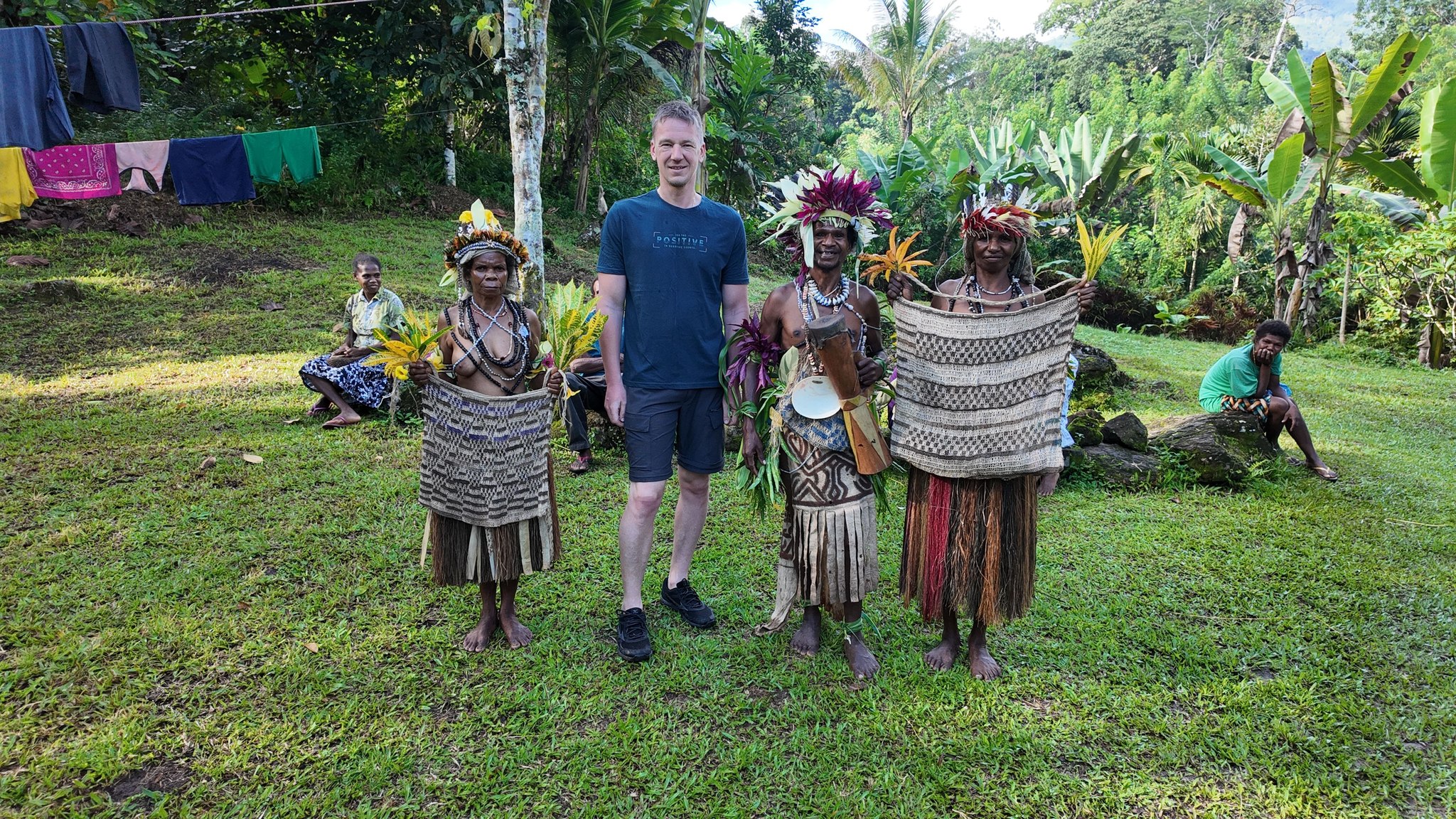
This is the reality I encountered in Daga. It is home to nearly 10,000 people, so of course, they are not a homogenous group. But the 15–20 individuals I spent the most time with, those with whom I had meaningful discussions, were people just like you and me. Intelligent, thoughtful, and knowledgeable about the world. I could sit and talk with them as I do with my friends—about sports, politics, life. Of course, they didn’t know much about EuroLeague basketball, and my knowledge of Australian rugby league was limited. But still, I felt at ease, comfortable.
And yet, at the same time, they live like nomads. They eat mostly what they grow and gather from the forest. They walk for days to visit relatives or transport basic goods they absolutely critically need, because for anything else there are no resources. There’s no electricity, though some villages have a generator, and when it’s turned on, people gather to charge their phones. But fuel must be carried on foot for days, making phone charging an occasional luxury. Some have small solar chargers, but they are inefficient.
From time to time, entire clans work together to arrange minimal supplies from the nearest town. There is no regular income, no outside involvement, no aid. If they want to educate their children, they build the school themselves—villages pooling resources, sometimes for years, to make it happen.
And yet, they stay. They raise their families, tend to their gardens, plant flowers. And they laugh. More than we do in Estonia.
Coffee
I don’t even know how realistic it is, but they hope that coffee is the key to breaking the cycle—to getting money flowing into the community. There are virtually no formal jobs beyond school teachers and a few administrative positions in the regional center. And in these conditions, no other cash crop can be grown in meaningful quantities.
But Daga is an outlier which makes everything more difficult. The coffee-growing regions of Papua New Guinea are hundreds of kilometers away. There are no other coffee-producing villages within 300 km. With the small quantity Daga currently produces—and all the logistical complexities—no one outside of Daga cares. Even within the PNG coffee sector, 90% of people likely don’t know that coffee grows here. If local cooperatives manage to get it to processing facilities (the last time this happened was in 2021), it is mixed with other beans and forgotten.
At the end of the day, you might ask: Why should we care?
There are countless other regions in the world suffering—places facing armed conflict, famine, natural disasters, and the devastating effects of climate change. And yes, it is up to each of us to decide what we care about. But in many cases, we cant really do much. We can’t end the gang terror in Haiti or armed conflict in Sudan. Luckily it is a bit easier in Daga. People there do not expect anyone to „save“ them, this is how they have lived for decades. They just hope that someone would value their work and coffee and give them some pathway to a better tomorrow. And when we were searching for a truly renegade coffee story, Daga stood out. After visiting, it stands out even more. And I have made my decision: If I can help, I will.
It’s up to you whether you want to join us on this journey. But if not, I hope this has at least given you a glimpse into Papua New Guinea, Daga and the way people live here.
______“

als Kaffeliebhaber.. vielleicht erfreulich zu wissen.
Deren Tees..
ich liebe sie.